Sensory Calibration: How to Professionalize Your Tea Tasting Experience
Professional tea tasting is a data-driven discipline, not just a sensory hobby. By mastering nebulization (the "slurp"), understanding the chemical "creaming down" of high-quality polyphenols, and adhering to ISO 3103 brewing standards, you can calibrate your palate to identify the specific maltiness and briskness of Amchong’s elite Assamica clones. This guide moves beyond basic flavors to explore the molecular science of the Brahmaputra terroir.
For the casual drinker, tea is a comfort; for the professional taster (the Sommelier or Liquorer), tea is a data set. To truly understand the output of a premier estate like Amchong, one must move beyond "liking" a brew and toward "calibrating" the senses. Sensory calibration is the process of aligning your palate with industry standards to identify specific chemical compounds, processing triumphs, and terroir markers.
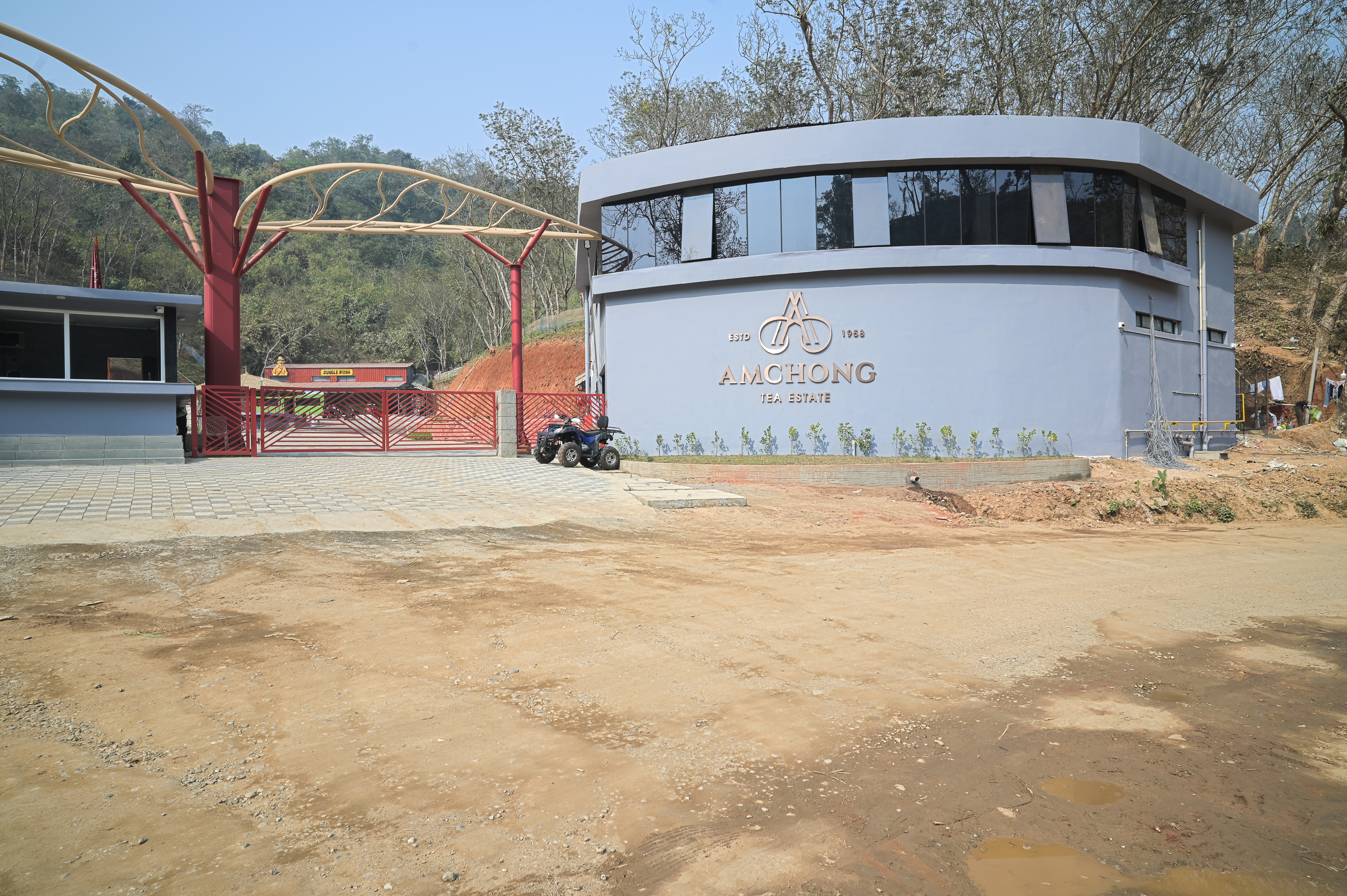
At Amchong Tea Estate & Park, located in the lush Panbari Mouza of Guwahati, our tasting experiences are designed to bridge this gap. Whether you are visiting our newly opened restaurant or walking the leaf-strewn paths of our plantation, understanding the "why" behind the flavor is the first step to professionalization.
1. The Physics of the "Professional Slurp"
Professional tea tasting isn't polite, it’s loud. The goal is nebulization. When you sharply draw a spoonful of tea into your mouth, you are atomizing the liquid, turning it into a fine mist that coats the entire tongue and reaches the olfactory receptors at the back of the nasal cavity.
-
Fact Check: Retronasal olfaction, the ability to perceive flavor through the back of the throat, accounts for approximately 80% to 90% of what we perceive as "taste."
-
The Amchong Standard: When tasting our high-grade Orthodox leaves, nebulization allows you to detect the volatile aromatic compounds (terpenes) that characterize the "Assam maltiness" before the heavy tannins hit the back of the tongue.
2. Calibrating the Five Primary Zones
A professional taster isolates the tongue’s reactions. In an Amchong tasting session, we focus on the interplay between Astringency and Body.
-
Briskness (The Tip of the Tongue): This is the "live" quality of the tea. If the tea feels flat, it lacks briskness. In the industry, we look for a "bite" that signals high-quality polyphenols.
-
Body (The Mid-Palate): This is the weight or "thickness" of the liquor. A world-class Assam CTC from our estate will have a heavy "mouthfeel" that lingers long after the liquid is gone.
-
Astringency (The Cheeks): Often confused with bitterness, true astringency is a tactile sensation, a drying of the mouth caused by tannins reacting with salivary proteins.
3. The Technical Parameters of the Tasting Set
You cannot calibrate your senses if your brewing variables are inconsistent. Professional tasting follows the ISO 3103 standard, but at the estate level, we refine this further:
-
Water-to-Leaf Ratio: Use exactly 2.83 grams of tea, the weight of an old British sixpence, for 140ml of water.
-
Temperature: For Amchong’s robust Black Teas, water must be at a "rolling boil" (100°C). Lower temperatures fail to extract the heavy thearubigins that give our tea its signature deep red "bright" liquor.
-
Time: Precisely 3 to 5 minutes. Any less, and the complex sugars don't emerge; any more, and the caffeine/tannin ratio becomes overwhelming.
4. Decoding "The Creaming Down" Phenomenon
One of the most advanced "fact-checks" of tea quality is the Creaming Effect. If you allow a cup of high-quality Amchong tea to cool, it may turn slightly cloudy. To a novice, this looks like a flaw. To a professional, it is a hallmark of excellence.
Technical Insight: "Creaming down" occurs when caffeine and theaflavins, the bright, golden-yellow pigments, bond as the temperature drops. This only happens in teas with extremely high nutrient density. If your cold tea stays perfectly clear, it likely lacks the chemical complexity found in estate-grown Assamica clones.
5. Analyzing the "Infused Leaf" (The Spent Leaf)
A professional never judges by the liquor alone. The infused leaf, the wet leaf, tells the story of the factory.
-
Color: At Amchong, we look for a bright, coppery-red hue in the spent leaf. A dull brown or "khaki" color indicates over-oxidation or poor storage.
-
Aroma: The wet leaf should smell of malt, honey, and damp earth. Any scent of "smoke" or "burnt toast" indicates a calibration error in the firing, drying, stage of the factory.
6. The Impact of the Brahmaputra Terroir
Sensory calibration requires understanding "place." Our estate sits at the edge of the Guwahati hills, where the soil is rich in alluvial silt and the humidity is trapped by the surrounding forest canopy.
-
The Fact: Assam’s low-altitude, high-heat environment triggers a rapid growth spurt in the Camellia sinensis var. assamica plant. This stress-free, rapid growth is what creates the high concentration of Tannic Acid compared to high-altitude teas, like Darjeeling, which are more floral and delicate.
Why Visit Amchong for Your Sensory Journey?
The digital world can describe flavor, but it cannot replicate the Organoleptic Experience. At Amchong Tea Estate, we invite you to move beyond the screen. Our Tea Tasting Experience is a curated deep-dive where you can sit with our master tasters and learn to identify the "clones" by taste alone.
After your session, you can transition from "Technical Tasting" to "Culinary Enjoyment" at our newly opened restaurant, where we pair these calibrated teas with local Assamese flavors that complement the tea’s specific chemical profile.
Conclusion: The Lifelong Calibration
Professional tea tasting is not a destination, it is a practice. Every season at Amchong, from the vibrant First Flush to the thick, malty Second Flush, offers a new data point for your palate. By controlling your variables and understanding the science of the leaf, you stop being a consumer and start being a connoisseur.
